In a recent post, I described how I experienced in-flight electrical failure, and therefore communications failure while in the traffic pattern at a controlled airport. This post contains additional references as a guide to what you should do if this happens to you.
- Fly the airplane. (Aviate… Navigate… Communicate… You knew that already, right?) If you’re all by yourself, in the dark, you will be busy. Trim to maintain altitude. Make sure you don’t run into anything. Keep flying the traffic pattern.
- Communicate. It’s possible that you can still transmit, but simply not receive. The tower may actually still hear you, so it’s worth transmitting in the blind just in case.
- Transponder to 7600. It may stil work on whatever power you still have. Worth a try, at least to inform ATC you know you have a problem.
- Try to solve the problem. If you can handle it, refer to your checklist. The checklist probably includes “cycle the alternator switch” which can reset a circuit breaker-type of thing. It’s possible you’re only running on battery power, so shedding extra load (turn off stuff you don’t really need) could help allow you to use radios. (I hope you brought your flashlight with you and it’s on a string around your neck for quick access!)
- Join the pattern, go with the flow. Just like an uncontrolled field, being where others expect you to be is valuable (Pilots Handbook of Aeronautical Knowledge, FAA-H-8083-25A, chapter 13).
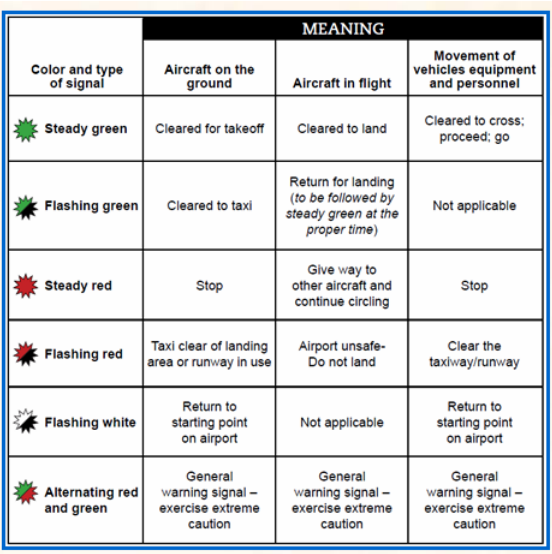
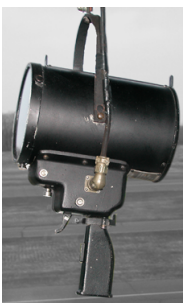
- Watch for ATC light gun signals. When the tower realizes you are “NORDO” (no radio, i.e., lost communications), they will give you clearance by shining a colored light in your direction. The table below defines the meaning of the various colors and patterns (AIM 4-3-13). Acknowledge the signal if you get one (move ailerons or rudder, or flash landing or nav lights). If you’re wondering what these light signals actually look like, ask the tower to show you next time you’re on final.
- Emergency authority. Remember that you can “deviate from any rule… to the extent required to meet that emergency” (FAR 91.3 (b)). Use it if you need it.